
Own Your Shit
On ego, disability, and learning to stop performing strength

A few years ago, when I started walking with a cane, an old friend pointed at it and said, “You need to own that shit.”
No warm-up. No gentle lead-in. Just the message.
Then he suggested I get a top hat to match.
Which felt aggressive. But also… not entirely wrong.
I laughed it off. Made a joke. Probably changed the subject. Because owning it, really owning it, felt like a bigger ask than learning how to walk with it.
It’s one thing to depend on a cane. It’s another to be seen using it. It’s something else to own it.
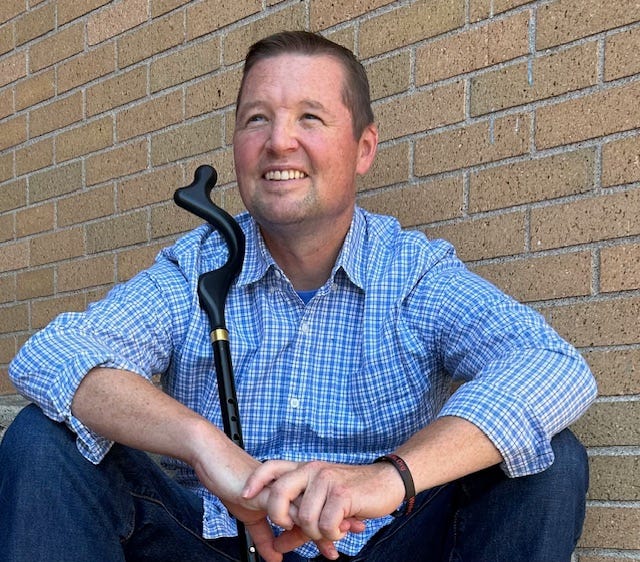
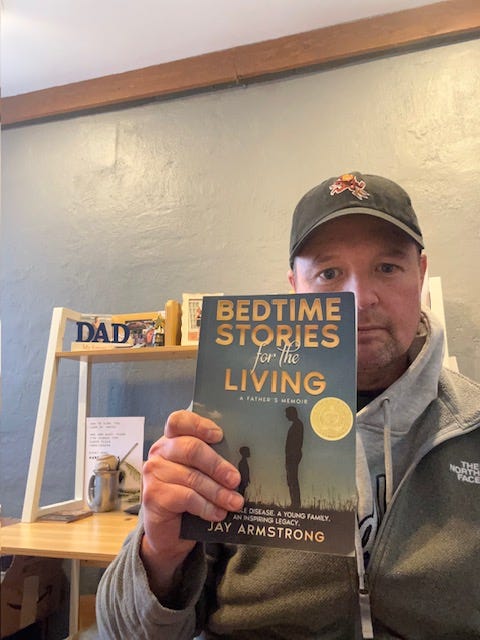
Not long after I committed to using the cane, Glenn approached me at my son’s baseball game. He introduced himself and said he had read Bedtime Stories for the Living. He had broad shoulders like a former football player, a hat pulled low, and sunglasses on like he was hiding from someone. Or maybe from something.
Glenn told me he had recently been diagnosed with ataxia. And was struggling. Then he said something that caught me off guard: seeing me use a cane in public had inspired him.
I told him I didn’t think it was inspiring. I was just tired of ending up in the ER.
If I’m honest, my ego still wants to pretend I don’t need the cane. Or the rollator. Or my wife’s hand when my balance goes sideways. It wants me to move faster than I can. It wants me to blend in when my life clearly has other plans. It wants the old version of me to still be in charge.
And I catch myself doing it sometimes. Performing strength instead of practicing honesty.
But letting go of that ego is where something begins to shift.
Not all at once. More gradually. More subtly. Kind of like warming up to the idea of wearing a top hat.
Most people spend their lives being evaluated by others and slowly mistake those opinions for truth.
Grades. Performance reviews. Followers. Productivity. Compliments. Criticism. The look someone gives you when you walk slowly through a parking lot holding a cane like it personally disappointed them.
At some point, you have to ask yourself: Can I tell the truth about my life without turning it into a tragedy or a fantasy?
That’s harder than it sounds.
Because many of us lose the ability to accurately assess ourselves. We either inflate our abilities out of ego or underestimate them out of fear. And disability makes that tension even sharper.
Once your life stops matching the image you had of yourself, self-evaluation becomes emotional fast. I’ve had to relearn myself in real time. I’ve had to admit that some things are harder now, while also refusing to believe that harder means hopeless.
So the work becomes small, steady decisions. Like owning your shit.
Because part of owning it is learning to trust your own read on your life. To know what you can do, what you can’t, and what actually helps. Not guessing. Not performing. Not outsourcing that judgment to whoever happens to be watching.
And, I suspect, there’s real freedom in that.
When you don’t own it, you spend enormous energy managing appearances instead of dealing with reality. You start performing instead of living.
And I’ll admit, I’ve done that. Still do. But I’m learning.
Owning my disability isn’t giving up. It’s how I take back some control. It’s how I stop fighting myself long enough to actually live my life.
The most important skill isn’t domination. Or confidence. Or toughness.
It’s the ability to see yourself clearly enough to live truthfully.
Lately, I’ve been realizing how much certain quotes stay with me. Not the motivational poster kind. The ones that follow you around for years and quietly change how you see your life.
So for the next few pieces, I’m taking lines from books I love and writing about how they collide with disability, identity, ego, resilience, and all the strange negotiations that come with this life.
Basically, literary analysis with more canes, curse words, and coffee.
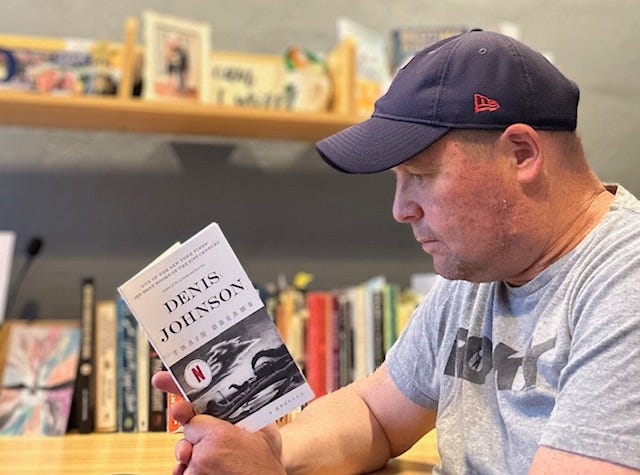
Jay Armstrong is an award-winning author and speaker who refuses to be defined by his diagnosis of a rare neurological disease. Despite challenges with movement, balance, eyesight, and speech, Jay continues to press forward with determination, humor, and hope. As the leader of the Philadelphia Ataxia Support Group, he’s dedicated to helping others find joy, peace, and meaning in their lives, no matter the obstacles they face.
„Owning my disability isn’t giving up. It’s how I take back some control. It’s how I stop fighting myself long enough to actually live my life“
That is the part I struggle with the most. I’m still learning how to do this, and I haven’t fully mastered it yet.
I would also like to thank you again for sharing your experiences. It truly helps me to cope with this and reminds me that I am not alone.