
Same Life, Different Frame
Jay's Journal: Notes on Resilience

After the port-o-potty incident in North New Jersey — wind howling, body wobbling, brain and bladder staging their own small rebellion — I drove home thinking about framing.
Not dignity. That had already packed up and left the premises.
Framing.

I’m a writer, which means I don’t just live my life — I narrate it. I circle it. I hold it up to the light and ask, What is this, really? Living with a progressive brain disease gives me plenty of material. It affects my balance, coordination, speech. It turns short walks into strategic missions and drawstrings into advanced engineering problems. One hundred yards can feel like Everest without the scenic views.
Those are the facts.
But facts are just lumber. The frame decides whether you’re building a cabin or a coffin.
If I wanted to frame my life as loss, I could make a strong case. MRIs. Scars. Broken bones. Exploratory medications. Research studies. Support groups. .Canes. Walkers. Genetic testing. Doctor reports.
That version of the story wouldn’t be wrong. It would just be incomplete.
Because there is also laughter in plastic bathrooms. There is the ridiculous joy of naming your rollator Mellow Yellow. There is the odd intimacy of knowing your body so well you can sense a neurological glitch before it fully arrives — like a sailor reading a subtle shift in the tide.
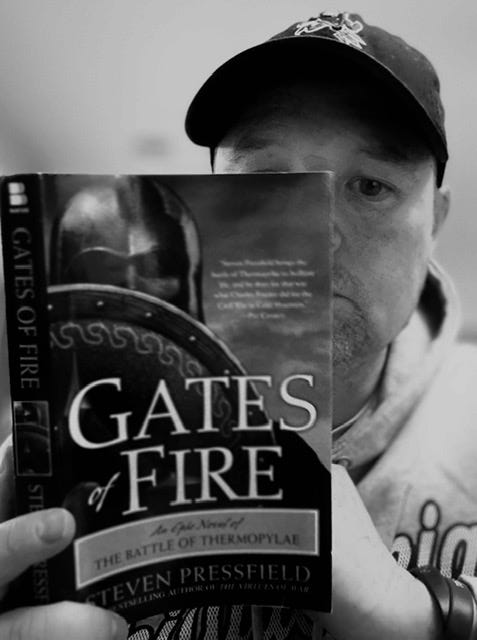
I’m currently reading Gates of Fire by Steven Pressfield, which is as brutal. It’s about the Spartans preparing fror their grear battle at Thermopylae against a Persian invasion. It’s violent, bloody and obscene and makes my physical therapy session in my dusty garage look like a spa day in the French Riviera.
But there’s a line in the book that keeps echoing: “The gods endow each man with a gift by which he may conquer fear.”
That sentence stopped me.
The Spartans conquered fear with discipline, loyalty, shield walls. Their gift was forged in training yards and tested in battle. Mine looks different. My gift is writing.Writing is how I conquer fear.
Fear of decline. Of humiliation. That this progressive condition will slowly narrow the borders of my life.
When I write about the wobble, it becomes a paragraph instead of a prophecy. When I describe the bathroom mishap with enough honesty — and maybe a touch of humor — it shifts from shame to story. The act of naming something robs it of some of its power. It pulls fear out of the shadows and sets it down on the page where I can examine it.
Resilience, the kind with muscle and breath in it, isn’t denial. It’s interpretation. It’s choosing to say: this will shape me, but it will not shrink me. It’s taking the gift you’ve been given — sword, shield, pen — and using it.
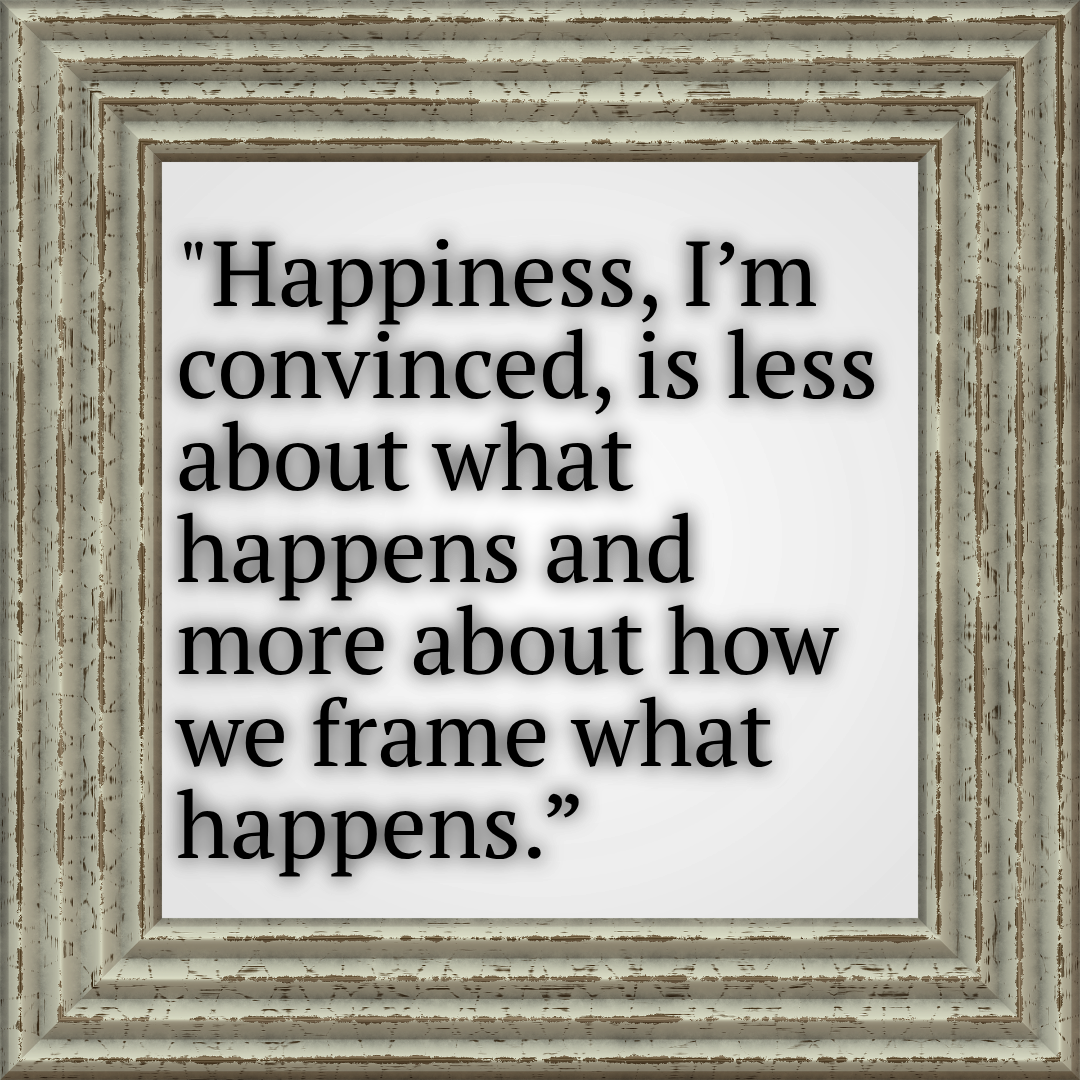
Happiness, I’m convinced, is less about what happens and more about how we frame what happens. Two people can live the same day and tell entirely different stories. One drafts a tragedy. The other writes a dark comedy with spiritual undertones and questionable bathroom aim.
Same scene. Different lens.
When I frame my life as an expedition instead of a slow unraveling, I’m not pretending my cerebellum is behaving. I’m practicing resilience. I’m insisting that this story is bigger than a diagnosis code.
There are setbacks. There are moments when my body refuses to cooperate and my pride takes a hit along with my balance.
But there are also sunsets over cold soccer fields. Conversations with strangers outside a port-o-potty. Prayers whispered in relief and gratitude — sometimes in the same breath.

If I wait for stability before I allow myself happiness, I’ll be waiting a long time. Stability may not be in the cards. But meaning? Meaning is still available. Joy is still available. Even in a body that sways.
The Spartans had their shield wall. I have sentences.
And when I sit down to write,I am using the gift I’ve been given. I am conquering fear in my own small, stubborn way.
Not on a battlefield. But on a page.
Jay Armstrong is an award-winning author and speaker who refuses to be defined by his diagnosis of a rare neurological disease. Despite challenges with movement, balance, eyesight, and speech, Jay continues to press forward with determination, humor, and hope. As the leader of the Philadelphia Ataxia Support Group, he’s dedicated to helping others find joy, peace, and meaning in their lives, no matter the obstacles they face.

To continue the metaphor… this essay is beautiful and structurally sound: form, function, and flourish!